
IVDR guidance and resources

Expert resources and sequencing solutions to help labs meet in vitro diagnostic regulation (IVDR) compliance standards

What is IVDR?

The In Vitro Diagnostic Medical Devices Regulation (EU) 2017/746 (IVDR) is the European Union’s framework for ensuring the safety, performance, and quality of in vitro diagnostic (IVD) medical devices. Since May 2022, IVDR replaced the previous IVD Directive (98/79/EC) and introduced stricter requirements for clinical evidence, performance evaluation, and post-market surveillance.1

Working with clinical labs to meet IVDR compliance standards

Compliance is mandatory for IVD manufacturers selling products in the EU, as well as clinical laboratories located in the EU or conducting tests for EU patients. The regulation applies to a wide range of devices, including genetic tests, companion diagnostics, and software intended for medical analysis.2

Illumina is committed to helping clinical laboratories navigate the evolving landscape of IVDR compliance and IVD development. By actively integrating customer feedback into its innovation strategy, Illumina ensures that its solutions are both practical and regulatory-ready. From assay design to validation, Illumina offers streamlined workflows, integrated informatics, and expert guidance to help labs reduce complexity and resource demands while confidently transitioning to IVDR-compliant operations.

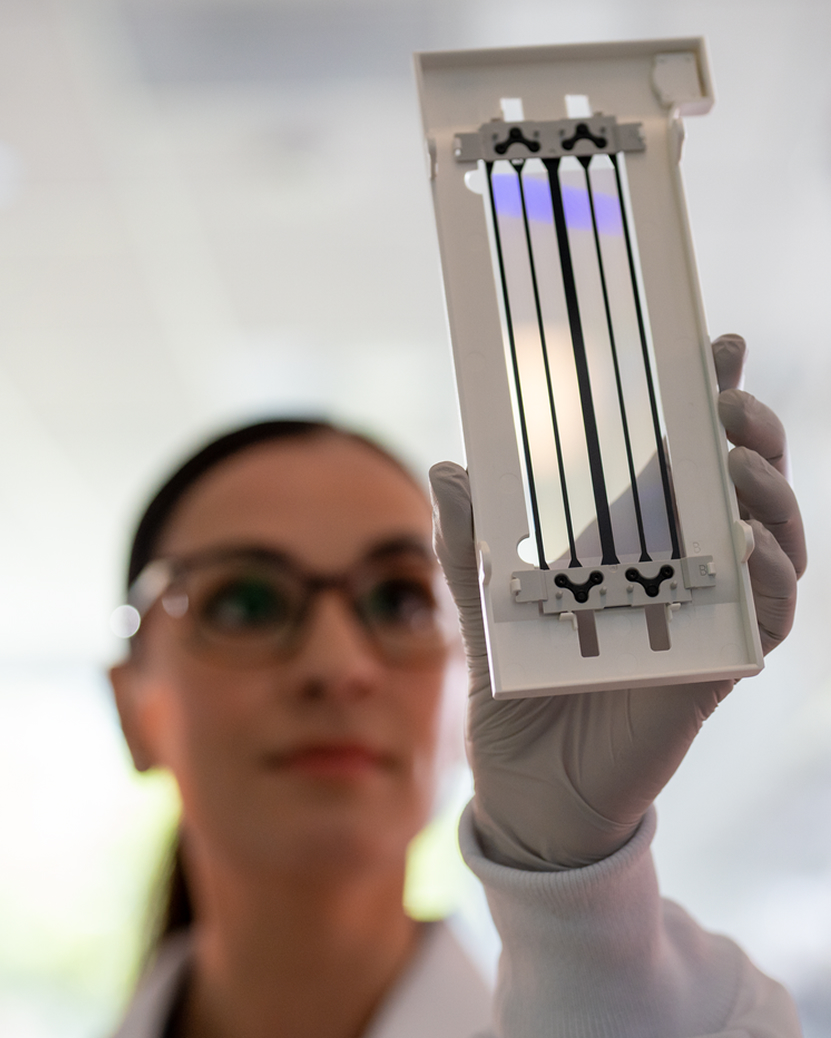
Scientist in lab with NovaSeq 6000Dx flow cell

What does IVDR mean for labs?

In this interview, Erik Vollebregt of Axon Lawyers shares his views on IVDR and why it is transforming diagnostics across Europe. Learn what labs need to do now and what changes are coming next.

Topics in the video include:

  1. How IVDR improves safety and performance standards while delivering benefits for laboratories and patients
  2. Key terms such as “Health Institution Exemption” and “industrial scale”
  3. Opportunities, challenges, and best strategies to drive innovation under IVDR while staying compliant
  4. Critical transition timelines and milestones
Thumbnail

IVDR classifications and Illumina product examples

Under IVDR regulations, IVD devices are categorized into four risk-based classes, ranging from Class A (lowest risk) to Class D (highest risk).

IVDR Class A applies to noncritical lab components that do not directly influence a patient result. Typical genomic device types include: sequencing instruments, accessory software, and universal reagents.

Illumina product examples

Conformity assessment snapshot

  • Self‑certification
  • ISO 13485 Quality Management System (QMS)—technical file kept onsite by manufacturer
  • No Notified Body (NB) review

IVDR Class B applies to devices with indirect clinical influence or intended for nonserious conditions. Typical genomic device types include assay controls without any assigned qualitative or quantitative values or low-risk self-testing devices (eg, diabetes or pregnancy tests).

Potential future Class B offering

  • Assay controls for DNA, RNA, and biomarker signature variant detectiona

Conformity assessment snapshot

  • NB QMS audit + Full technical documentation review
  • CE certificate issued by NB

IVDR Class C applies to tests that detect or screen for serious or congenital diseases. Typical genomic device types include: comprehensive oncology panels, NIPT assays, and target enrichment kits.

Illumina product examplesb

Potential future Class C offerings

  • Oncology panels

Conformity assessment snapshot

  • NB QMS audit + Full technical documentation review

  • Clinical and analytical performance studies

  • Post‑market performance follow‑up (PMPF) plan

  • Vigilance reporting

IVDR Class D is the highest‑risk devices impacting blood safety or life‑threatening infectious disease management. Typical genomic device types include: pathogen detection and blood group genotyping.

Conformity assessment snapshot

  • NB review + EU reference lab (EURL) testing
  • NB sample review of batch/lot release verification testing
/ Results
  1. Expected to seek Class B under IVDR.
  2. Classifications reflect current IVDR submissions or IVD claims and may change following notified‑body review.

Key benefits of Illumina IVD products

Illumina delivers comprehensive, validated clinical sequencing workflows that balance innovation with regulation.

Comprehensive portfolio

Explore a complete suite of assays, IVD instruments, and bioinformatics designed to power your workflow from start to finish.

IVDR-ready components

Streamline regulatory compliance using validated kits, intuitive software, and detailed documentation with confidence.

Targeted insight

Cover emerging regions of interest in the human genome, such as those identified by ENCODE, FANTOM5, and the Epigenomics RoadMap Consortium

Illumina regulated product portfolio

The Illumina IVD product portfolio empowers clinical laboratories with flexible, high-performance solutions to meet the demands of modern diagnostics and IVDR compliance. From IVD sequencing instruments to validated assays and integrated informatics, Illumina enables labs to streamline workflows, accelerate assay development, and deliver accurate, actionable insights across oncology, reproductive health, and rare genetic diseases. Explore the Illumina product pathway plan to IVDR to find your next solution.

The following overview outlines how Illumina IVD products align with IVDR classifications to help you plan your workflow and anticipate regulatory requirements.

Assays

Assay and application IVDR class Regulatory status
TruSight Oncology Comprehensive (EU)
Pan‑cancer genomic profiling
C CE mark (IVDD), IVDR compliance in progress
TruSight Cystic Fibrosis
Cystic fibrosis testing
C CE mark (IVDR)
VeriSeq NIPT Solution v2
Noninvasive prenatal testing
C CE mark (IVDR)
Illumina DNA Prep with Enrichment Dx
Target enrichment library prep
A CE mark (IVDR)
Panels in development
Targeted gene panel testing
- In development for IVDR launch

IVD sequencing instruments

Instrument and throughput IVDR class Key specs
MiSeqDx Instrument
Low throughput
A Output: ≤ 15 Gb/run
Max read length: 2 × 300 bp
NextSeq 550Dx Instrument
Mid throughput
A Output: ≤ 120 Gb/run
Max read length: 2 × 150 bp
NovaSeq 6000Dx Instrument
High throughput
A Output: Up to 6 Tb/run
Max read length: 2 x 150 bp

Unlock the power of genomics–based diagnostics

Get a comprehensive look at regulated NGS solutions from Illumina that are designed to help clinical laboratories deliver accurate, scalable, and compliant testing. Learn how Illumina platforms and software streamline workflows, improve efficiency, and support a wide range of applications from genetic disease and reproductive health to oncology. Discover the benefits of instruments, validated assays, and advanced informatics that work together to simplify compliance and accelerate insights for better patient outcomes.

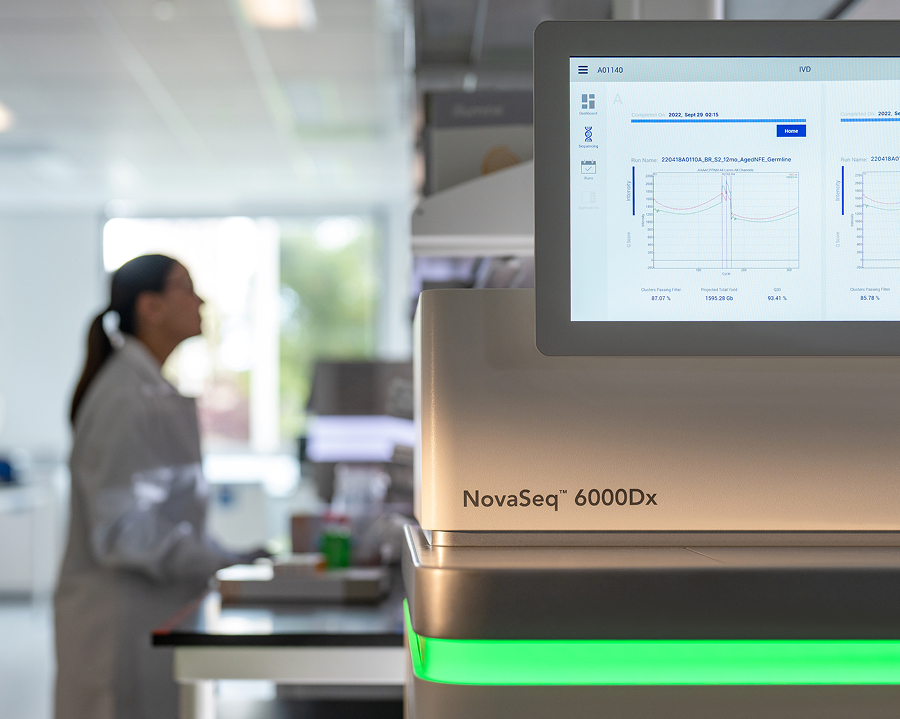
Illumina NovaSeq 6000Dx in lab

Software (data analysis)

Software and application IVDR class Regulatory status
Illumina DRAGEN Server for NovaSeq 6000Dx
Secondary analysis pipeline (alignment + variant calling)
A CE mark (IVDR)
In development
Interpretation and reporting platform for somatic analysis
- Planned for IVDR submission
In development
AI‑powered clinical insights engine for germline analysis
- Planned for IVDR submission

Simplified IVDR documentation

Platomics provides a secure, cloud based platform that streamlines technical documentation, performance evaluation studies, and EUDAMED submissions. Together, Illumina hardware and Platomics digital workflows offer laboratories a comprehensive path to IVDR compliance. Platform highlights include:

  • Prepopulated device and assay records
  • Guided performance evaluation modules
  • Real-time dashboards to track notified body feedback
Scientists reviewing simplified IVDR documentation in lab

FAQ

Key IVDR milestones that have already gone into effect include:

  • 2017: Regulation (EU) 2017/746
  • 26 May 2022: Date of application (DoA) for new and on-market IVDD-compliant nonsterile class A devices
  • 31 December 2027: For Class D
  • 31 December 2028: For Class C
  • 31 December 2029: For Class B and Class A sterile products

IVDD CE marking under the old In Vitro Diagnostic Directive (IVDD 98/79/EC) is no longer sufficient for new devices after 26 May 2022, when the In Vitro Diagnostic Regulation (IVDR, Regulation (EU) 2017/746) became applicable. However, legacy devices that were IVDD CE-marked under IVDD can still be placed on the market during extended transitional periods, provided they meet certain conditions (such as no significant design changes and compliance with post-market surveillance under IVDR). Visit the Public Health page of the European Commission for medical devices for the latest information.

The In Vitro Diagnostic Directive (IVDD 98/79/EC) established the original EU framework for in vitro diagnostic devices, focusing on essential safety and performance requirements. IVDR, which replaced IVDD in 2022, introduced a more robust and transparent system. It applies a risk-based classification (Classes A–D), significantly increases notified body involvement, mandates comprehensive performance evaluations (scientific validity, analytical and clinical performance), strengthens post-market surveillance, and adds traceability measures such as Unique Device Identification (UDI) and EUDAMED registration.2–5

Yes. Depending on its intended use, software for diagnostic purposes is considered a medical device under IVDR and must meet the same compliance requirements as other IVD devices.6

/ Results

Related content

Oncology

NGS provides deep insights into the molecular underpinnings of tumors and can help advance the promise of personalized medicine.

Genetic and rare diseases

NGS is helping to drive breakthroughs in genetic disease testing by facilitating identification of disease–causing genetic variants.

Get in touch

Learn how Illumina can help you navigate the IVDR transition, find out how to simplify your IVDR documentation, or inquire about specific products or upcoming IVDR launches.

References

  1. MedTechEurope.org. Medical technology regulations. Clinical Evidence Requirements under the EU In Vitro Diagnostics Regulation (IVDR). Published February 2023. Accessed November 17, 2025.
  2. European Union. Access to European Union Law. Regulation - 2017/746 - EN - Medical Device Regulation - EUR-Lex. Updated October 1, 2025. Accessed November 17, 2025.
  3. European Union. Access to European Union Law. Directive - 98/79 - EN - EUR-Lex. Updated November 1, 2012. Accessed November 17, 2025.
  4. Iqvia Medtech. Insight brief. Understanding In Vitro Diagnostic (IVD) Risk-Based Classification in EU and US. Published September 13, 2023. Accessed November 17, 2025.
  5. European Commission. Medical Devices - EUDAMED. UDI/Devices registration. Accessed November 17, 2025.
  6. European Commission. Medical Devices - EUDAMED. Guidance on Qualification and Classification of Software in Regulation (EU) 2017/745 – MDR and Regulation (EU) 2017/746 – IVDR. Updated June 2025. Accessed November 17, 2025.