Shotgun metagenomic sequencing

Sequence thousands of organisms in parallel using NGS

What is shotgun metagenomic sequencing?

Shotgun metagenomic sequencing lets researchers sequence virtually all genes from the organisms present in a complex sample.1,2 This culture-free next-generation sequencing (NGS) method enables microbiologists to evaluate bacterial diversity and measure the abundance of microbes in various environments. Shotgun metagenomics also provides a means to study unculturable microorganisms that are otherwise difficult or impossible to analyze.3

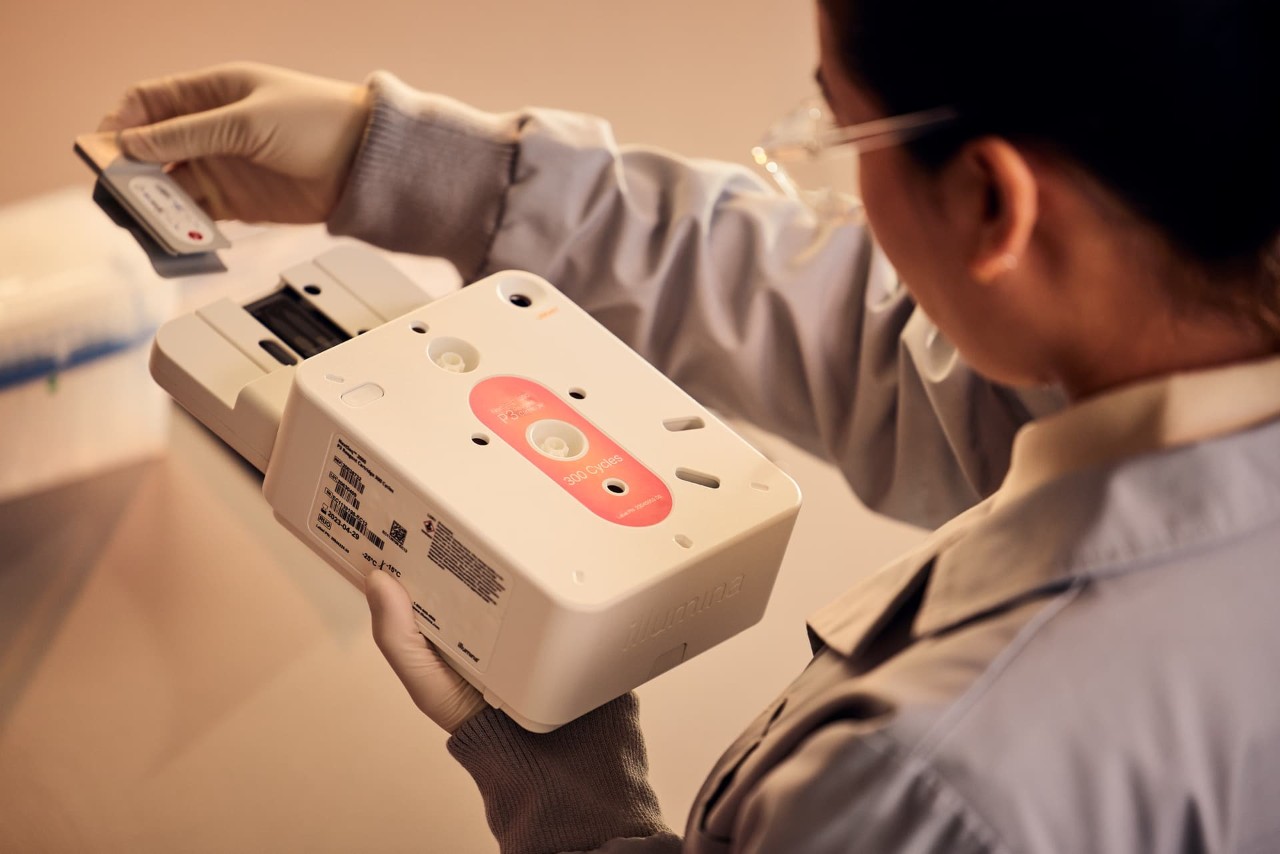
Scientist, back view, removing gray tab protective coving over flow cell from NextSeq 1000/2000 P3 reagent cartridge, 300 cycles

NGS Workflow Finder

Take the guesswork out of your next workflow. The NGS Workflow Finder provides personalized solution recommendations and resources so you can sequence with confidence.

Why sequencing depth is important for shotgun metagenomics

Sequencing depth refers to the number of sequencing reads that align to a reference region in a genome. This is important because a greater sequencing depth provides stronger evidence that the results are correct. Although shotgun metagenomic sequencing is comprehensive, the generated data can be costly and complex to analyze compared to 16S sequencing. Shallow shotgun sequencing is a method that provides a helpful alternative against the drawbacks of both methods, providing shallower reads compared to full shotgun sequencing while enabling higher discriminatory and reproducible results compared to 16S sequencing.4

Applications of shotgun metagenomic sequencing

Human microbiome analysis

See how next-generation sequencing (NGS) can empower studies capable of surveying the genomes of entire microbial communities, including those of unculturable organisms.

Genomic surveillance

Learn how researchers use genomic surveillance to study pathogens at a molecular level, providing insights into their behavior and evolution in populations around the world.

Recommended shotgun metagenomics workflows

1
Prep
For 2 × 150 bp runs only:
Compatible with 2 × 150 and 2 × 300 bp runs:
2
Sequence
3
Analyze
1
Prep
For 2 × 150 bp runs only:
Compatible with 2 × 150 and 2 × 300 bp runs:
2
Sequence
3
Analyze

Guide to shotgun metagenomic sequencing

Read this guide to understand how to sequence complex microbial samples for important diseases or to gain insight into community-level microbial biodiversity and function.

Two researchers, man and woman, kneeling in the middle of a forest near at the bed of a river, holding a jar filled with murky river water, looking closely at the composition and assessing.

FAQ

Shotgun metagenomic sequencing has three basic steps: library preparation, sequencing, and analysis. Extracted DNA is randomly sheared, adapters are added, and the library is sequenced on an NGS system. Reads are then classified taxonomically and analyzed for gene content using bioinformatics pipelines such as the DRAGEN Metagenomics pipeline. Multiple samples can be multiplexed in a single run to sequence thousands of organisms in parallel.

After sequencing, reads are classified taxonomically and assessed for community composition and gene content. Analysis can include quality control, host-read filtering, organism detection, and single-sample or aggregate reporting across a study. The DRAGEN Metagenomics pipeline performs taxonomic classification of reads and provides single-sample and aggregate reporting for shotgun metagenomics workflows.

16S rRNA sequencing is an amplicon-based method that targets a single taxonomic marker in bacteria and archaea. Shotgun metagenomic sequencing captures genomic DNA from virtually all organisms in a sample, providing broader taxonomic coverage and access to functional gene information. Use 16S rRNA sequencing to profile bacterial communities cost-effectively. Use shotgun metagenomics when you need species-level resolution, functional insight, or detection of fungi, viruses, and genes such as antimicrobial resistance markers.

Shallow shotgun metagenomic sequencing uses lower read depth than traditional deep shotgun metagenomics while still sequencing whole-community DNA rather than a single amplicon. It can offer higher discriminatory power and reproducibility than 16S sequencing at a lower cost and complexity than deep shotgun sequencing. It is a practical option when you need species-level characterization or functional profiling without the read depth required for the most sensitive detection targets.

Not always. The sequencing depth you need depends on the question you are asking. Taxonomic profiling of abundant community members typically requires far fewer reads than detecting low-abundance organisms or profiling antimicrobial resistance gene families. Rarefaction curves can help estimate whether additional sequencing will reveal more species in your sample. Shallow shotgun approaches can be a useful middle ground when deep sequencing is not required for your study goals.

Researchers use metagenomic sequencing to study microbial communities in human, environmental, and agricultural samples without culturing each organism. Common uses include identifying which organisms are present in a sample, estimating relative abundance, surveying functional gene content, supporting pathogen and outbreak research, and monitoring antimicrobial resistance. For more information, visit human microbiome analysis, environmental metagenomics, and antimicrobial resistance surveillance.

/ Results

Related methods

16S and ITS rRNA sequencing

NGS-based Internal Transcribed Spacer (ITS) and 16S rRNA gene sequencing are well-established methods for comparing sample phylogeny and taxonomy from complex microbiomes or environments that are difficult to study.

Metatranscriptome sequencing

Learn how to study the expressed mRNA of complex microbial communities as a whole. Metatranscriptomic sequencing also gives researchers insight into how microbes respond to their environment at a specific point in time.

Additional resources

The mysterious world of microbes

Read how researchers are investigating the genomes of microbes to improve our understanding of human health, disease, and microbial evolution.

Soil metagenomics workflow

Read this application note to learn about using shotgun metagenomics for scalable studies of soil microbes.

Metagenomic sequencing on the NovaSeq 6000 System

In this application note, see how shotgun metagenomics is used to study a diverse array of bacterial and metagenomic samples with the NovaSeq 6000 System for high-throughput workflows with longer read lengths.

Speak to a specialist

Looking to get started on shotgun metagenomic sequencing in your lab?

References

  1. Quince, C., Walker, A., Simpson, J. et al. Shotgun metagenomics, from sampling to analysis. Nat Biotechnol. 2017; 35, 833–844. doi: 10.1038/nbt.3935
  2. New FN, Brito IL. What Is Metagenomics Teaching Us, and What Is Missed? Annu Rev Microbiol. 2020; 74:117-135. doi: 10.1146/annurev-micro-012520-072314.
  3. Sharpton TJ. An introduction to the analysis of shotgun metagenomic data. Front Plant Sci. 2014; Jun 16;5:209. doi: 10.3389/fpls.2014.00209
  4. Hillmann B, Al-Ghalith GA, et al. Evaluating the Information Content of Shallow Shotgun Metagenomics. mSystems. 2018 Nov 13;3(6):e00069-18. doi: 10.1128/mSystems.00069-18.