Immune repertoire sequencing (IR-Seq)

Gain genetic-level insights into the BCR and TCR repertoire with immune profiling

scientists in lab library prep

What is immune repertoire sequencing?

Immune repertoire sequencing (IR-Seq) uses next-generation sequencing (NGS) to profile the diversity of B-cell receptors (BCRs) and T-cell receptors (TCRs).1 IR-Seq enables researchers to characterize repertoire diversity and clonality, and investigate receptor sequences associated with hematological malignancies, autoimmune disorders, and other conditions.2 IR-Seq provides the throughput and sensitivity needed to analyze BCRs and TCRs at high resolution, enabling insights into adaptive immunity in health and disease.

The immune repertoire of BCR and TCR sequences is dynamic in response to infections, autoimmune disorders, and cancer. The repertoire of circulating antigen receptors shifts from a diverse pool to one that is dominated by expanded, antigen-specific clones during an immune response. Therefore, understanding the composition of the immune repertoire is essential for deepening our understanding of immune-mediated diseases and informing therapeutic development.3

Defining the immune repertoire

The adaptive immune system is primarily composed of two major lymphocyte types: T cells and B cells. These immune cells are critical for providing protection from pathogens through a genetic recombination process that generates a highly diverse repertoire of antigen receptors.4 When an antigen receptor recognizes a target pathogen, a series of events takes place to amplify that receptor and recruit additional immune cells to eliminate the infection.

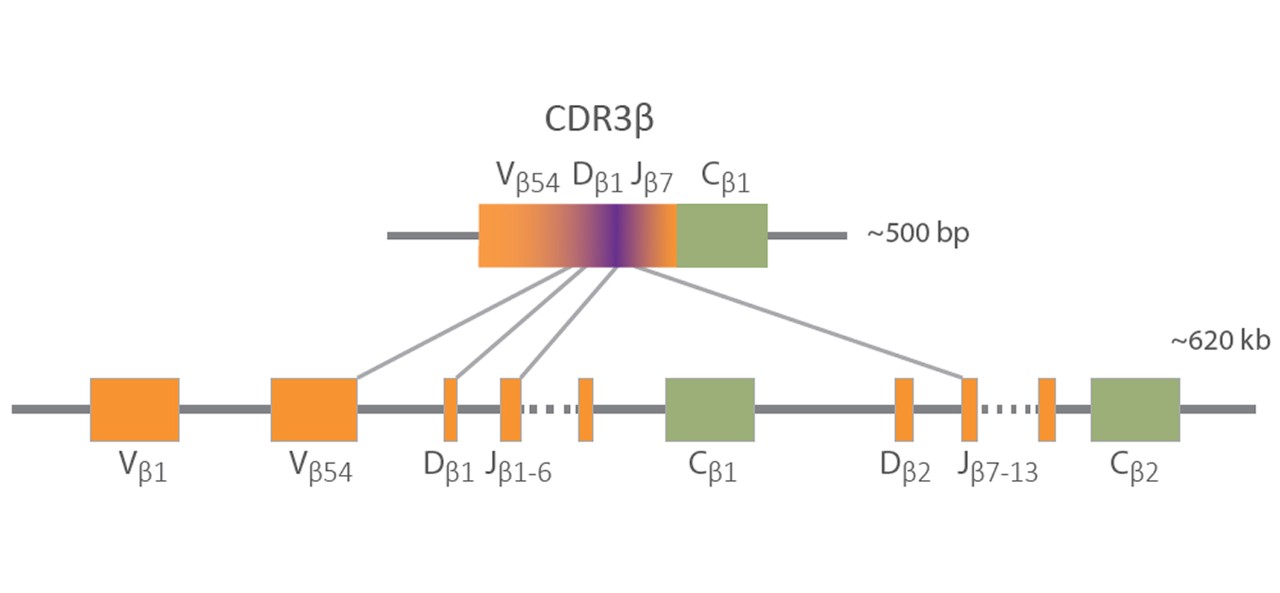
Functional BCRs and TCRs are created through V(D)J recombination, where variable (V), diversity (D), and joining (J) gene segments are stochastically recombined. This process produces a highly diverse population of BCRs and TCRs in healthy individuals. The complete collection of BCRs and TCRs, the BCR repertoire and TCR repertoire, constitutes the immune repertoire.5

Representation of TCR-β V(D)J gene recombination to help clarify TCR diversity in regards to immune repertoire sequencing.

Representation of TCR-β V(D)J gene recombination. The TCR-β locus, located on chromosome 7, spans approximately 620 kb. During V(D)J recombination, one of two D regions is randomly joined with one of 13 J regions. This is followed by the addition of one of more than 50 randomly selected V regions, yielding a final VDJ region that is approximately 500 bps. The mechanism by which gene segments are joined also introduces base pair variability, which, together with the combinatorial selection of these segments, results in TCR diversity. An analogous process occurs for the TCR α chain, which lacks the D segment. CDR = complementarity-determining region.

Immune repertoire sequencing solutions

Discover tested third-party library prep kits and explore our sequencing systems to identify the best solutions for your IR-Seq workflow.

IR-Seq library preparation kits

The choice of an immune repertoire library solution depends on various factors such as input, methodology, regions sequenced, and chain type. Select a tested third-party library preparation kit for your IR-Seq application needs.

Tested third-party library prep kits for IR-Seq applicationsa

Resolution and regions sequenced Provider and kit name Targeted receptors Sequencing read length recommendation
Bulk RNA-Seq
CDR3/full-length
New England Biolabs
NEBNext Immune Sequencing Kit (Human) (E6320S, E6320L)
BCR, TCR or,
BCR + TCR 
2 × 300 bp 
Bulk RNA-Seq
CDR3/full-length
New England Biolabs
NEBNext Immune Sequencing Kit (Mouse) (E6330S, E6330L)
BCR, TCR or,
BCR + TCR 
2 × 300 bp 
Bulk RNA-Seq
CDR3/full-length
QIAGEN
QIAseq Immune Repertoire RNA Library Kit (333705)
TCR 2 × 300 bp 
Bulk RNA-Seq
CDR3/full-length
Takara
SMART-Seq Human TCR (with UMIs) (634780, 634781, 634779)
TCR 2 × 300 bp 
Bulk RNA-Seq
CDR3/full-length
Takara
SMART-Seq Human BCR (with UMIs) (634777, 634778, 634776)
BCR 2 × 300 bp 
Single cell
CDR3/full-length
BD Bio
BD Rhapsody TCR/BCR Multiomic Assay Kit (665828, 665829)
BCR, TCR or,
BCR + TCR 
85 × 215 bpb or
2 × 300 bp 
  1. Represented libraries use unique molecular index (UMI) technology, providing error correction, deduplication, and high confidence reads coming out of the pipeline. 
  2. Run configurations for single cells are compatible with smaller 300-cycle kit cartridge.

IR-Seq instruments

MiSeq i100 in lab

MiSeq i100 Series

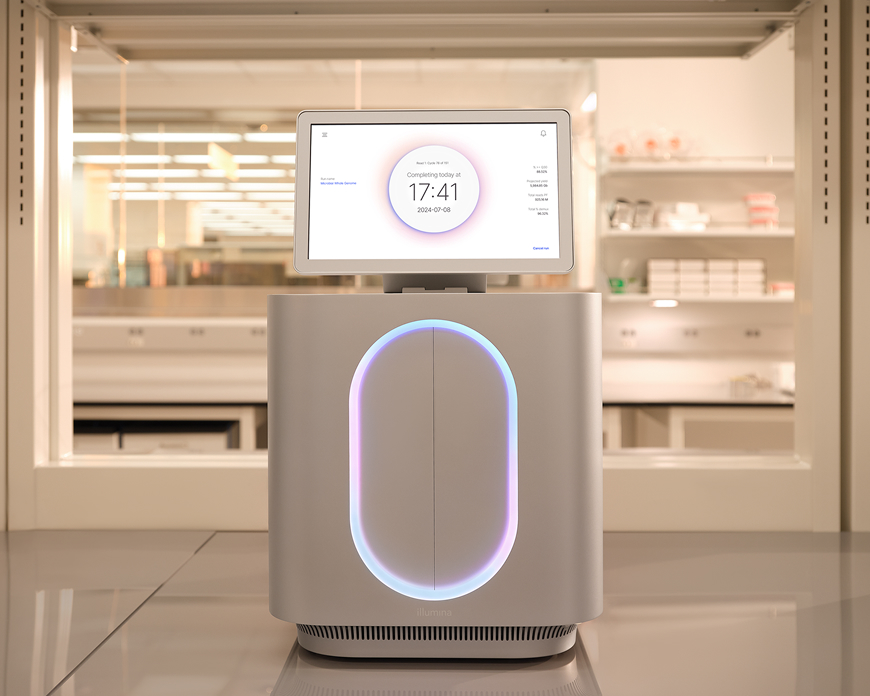
The MiSeq i100 Series offers 10 different reagent configurations. These configuration options include IR-Seq, with read lengths up to 2 × 300 bp, that supports an output range of 5 million to 100 million reads and 1.5 Gb–30 Gb. This expanded capacity allows researchers to increase sample throughput and perform deeper sequencing. 

NextSeq 1000 and NextSeq 2000 System in lab

NextSeq 1000 and NextSeq 2000 Systems

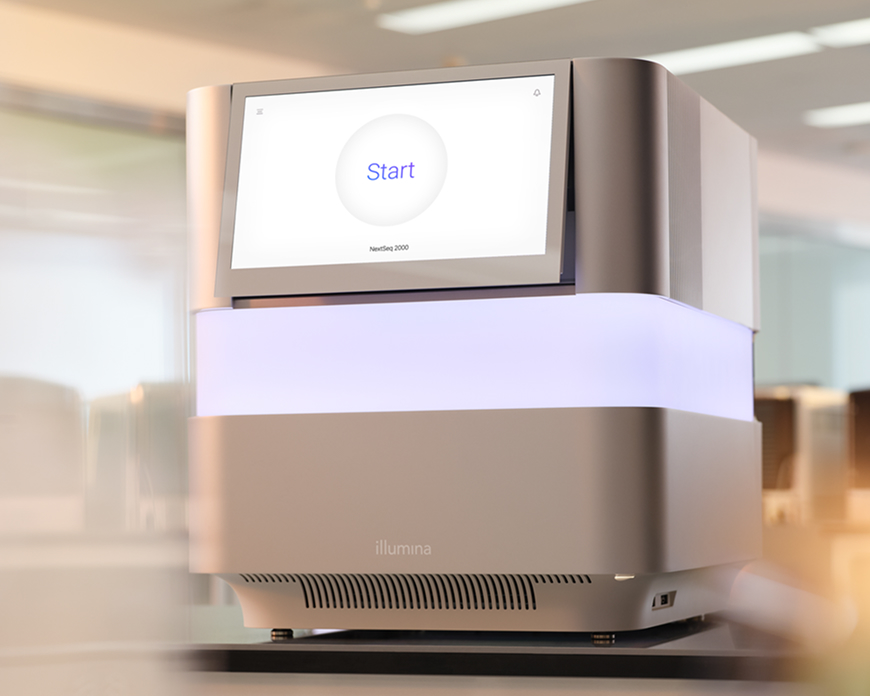
The incredible diversity of the immune repertoire means that analysis requires high sequencing depth. Learn more about tested library preparation kits and our NextSeq 1000 and NextSeq 2000 Sequencing Systems that provide the reads necessary for a detailed view of the immune repertoire.

Multiomics approach for immune repertoire analysis

Multiomics is an integrated approach that provides powerful biological insights by combining data sets from multiple molecular levels, including genomics, transcriptomics, epigenetics, and proteomics. Multiomics enables a more holistic and integrated understanding of how different biological levels interact. Furthermore, the combination of different NGS techniques can provide multiomic insights that expand our understanding of the immune repertoire, drug resistance mechanisms, and possible future disease treatment strategies.6

Multiomics data sets are inherently complex, making analysis a significant challenge. Illumina Connected Multiomics software empowers researchers with intuitive, scalable analysis, for streamlined sample-to-insights workflows. With these built-in capabilities, biologists can confidently generate powerful statistics and interactive visualizations without a bioinformatics background. Explore our multiomics resource page to expand your research across multiple omes and learn about Illumina Connected Multiomics software for multiomics data analysis and visualization needs.

scientist in lab reviewing data on laptop

Featured webinars

Multiomics in cancer immunotherapy

Join an interdisciplinary panel of experts, including Samra Turajlic (The Francis Crick Institute), Rong Fan (Yale University), and Christina Leslie (Memorial Sloan Kettering Cancer Center), who speak about the advances and challenges in their research using multiomics.

Immunology discoveries at the single-cell level

Hear from Dr Pandurangan Vijayanand (La Jolla Institute of Immunology), Shane Liddelow (NYU Langone), and Menna Clatworthy (University of Cambridge) who highlight advances made in distinct fields using single-cell sequencing technology.

IR-Seq FAQ

Three major approaches are used to obtain repertoire sequencing data:

  1. Bulk tissue analysis: Purified total RNA is subjected to multiplex PCR for all V and C segments of the immune receptor genes. The resulting amplicons are sequenced by NGS, followed by data analysis.
  2. Single-cell repertoire sequencing: Individual B and T cells undergo single-cell transcriptome sequencing, typically by enrichment PCR using sequence-specific primers for BCR and TCR genes. Prepared libraries are sequenced by NGS and analyzed. 
  3. Bioinformatics-based reconstruction: Public databases of bulk RNA sequencing and single-cell sequencing data are used to reassemble the immune repertoire sequences using computational approaches.3

In immunology, the immune repertoire refers to the complete collection of unique BCRs and TCRs in an individual at the specific moment in time. However, the BCR and TCR repertoire is dynamic and can rapidly change during an immune response.

The antibody repertoire plays a significant role in providing humoral immunity and is defined by an individual’s complete collection of BCRs and antibody sequences.7

IR-Seq is used in numerous research areas, including basic immunology, immune repertoire characterization, vaccine research, and lymphocyte lineage tracking.8

Visit the immunogenomics research page to gain insights into immunological disease with genomics.

/ Results

Related resources

Immunogenomics research

Immunogenomics solutions to help researchers gain insight into potential autoimmune disease mechanisms and the immune repertoire.

RNA sequencing

A high-resolution view of coding and noncoding regions of the transcriptome for a deeper understanding of biology.

Speak with a specialist

Talk to an expert to learn more about solutions for immune repertoire sequencing studies.

References

  1. Woodsworth DJ, Castellarin M, Holt RA. Sequence analysis of T-cell repertoires in health and disease. Genome Med. 2013;5(10):98. doi:10.1186/gm502
  2. Robins H. Immunosequencing: applications of immune repertoire deep sequencing. Curr Opin Immunol. 2013;25(5):646-652. doi:10.1016/j.coi.2013.09.017
  3. Katoh H, Komura D, Furuya G, Ishikawa S. Immune repertoire profiling for disease pathobiology. Pathol Int. 2023;73(1):1-11. doi:10.1111/pin.13284
  4. InformedHealth.org. Cologne, Germany: Institute for Quality and Efficiency in Health Care (IQWiG); 2006. In brief: The innate and adaptive immune systems. ncbi.nlm.nih.gov/books/NBK279396. Accessed September 12, 2025. 
  5. Liu H, Pan W, Tang C, et al. The methods and advances of adaptive immune receptors repertoire sequencing. Theranostics. 2021;11(18):8945-8963. doi:10.7150/thno.61390 
  6. Wu X, Yang X, Dai Y, et al. Single-cell sequencing to multi-omics: technologies and applications. Biomark Res. 2024;12:110. doi:10.1186/s40364-024-00643-4 
  7. Miho E, Roškar R, Greiff V, Reddy ST. Large-scale network analysis reveals the sequence space architecture of antibody repertoires. Nat Commun. 2019;10(1):1321.  doi:10.1038/s41467-019-09278-8 
  8. Ma KY, He C, Wendel BS, et al. Immune Repertoire Sequencing Using Molecular Identifiers Enables Accurate Clonality Discovery and Clone Size Quantification. Front Immunol. 2018;9:33. doi:10.3389/fimmu.2018.00033