Liquid biopsy research

Combining sample accessibility with robust analysis for cancer research

Study biomarkers in liquid biopsies with NGS

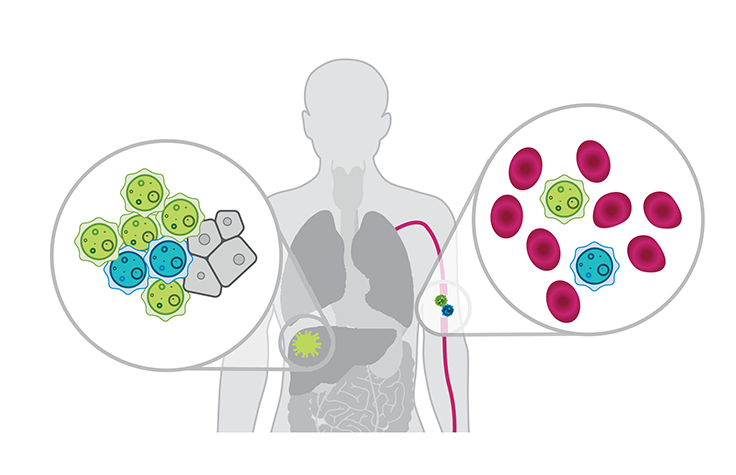
Scientists can use liquid biopsy samples to detect and characterize various cancer-derived biomarkers present in the blood. These biomarkers are absent in healthy individuals and those who are cancer-free.1 Illumina offers innovative next-generation sequencing (NGS) liquid biopsy solutions for cancer biomarker research to analyze:

  • Circulating tumor cells (CTCs)
  • Cell-free DNA (cfDNA) and circulating tumor DNA (ctDNA)
  • Cell-free RNA (cfRNA) and circulating tumor RNA (ctRNA)
  • Circulating proteins for detection and profiling

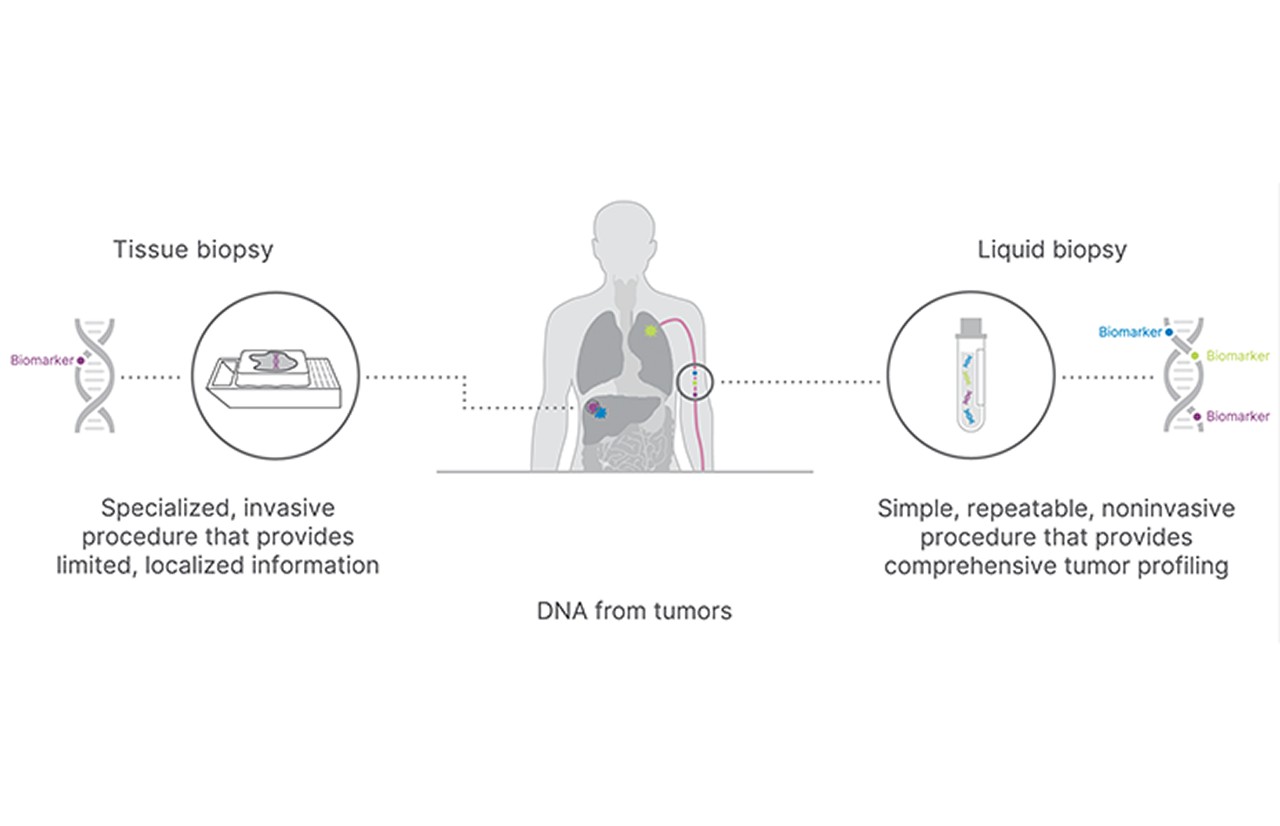
Limitations of tissue biopsy

Several challenges limit the utility of tissue biopsy in translational and clinical cancer research, including:2

  • Inaccessibility of the tissue of interest
  • Requirement for specialized skills from qualified medical personnel
  • Invasiveness of repeat biopsies over time
  • Limited representation of intra- and inter-tumor heterogeneity
  • Patient ineligibility for physical biopsy due to significant procedural risk, insufficient quality or quantity of tissue, and other factors

What are circulating tumor cells (CTCs)?

CTCs are cells shed from tumors into the bloodstream. Multiple studies have demonstrated that CTCs have metastatic potential and are associated with aggressive or advanced disease and poor prognosis in various cancer types. While CTCs can serve as biomarkers for liquid biopsy–based cancer characterization, their rarity in the bloodstream remains a significant challenge for detection and characterization. NGS-based technologies, which can detect low levels of CTCs with high-throughput capabilities, are opening an exciting frontier for cancer screening and early detection.3-6

Popular methods of CTC isolation involve:

  • Enrichment of CTCs based on antigen expression, eg, epithelial cell adhesion molecule (EpCAM)7
  • Depletion of non-CTCs, such as blood cells and immune cells8
  • Leukapheresis9

Technological advances in single-cell isolation and single-cell sequencing methodologies have enabled detailed analysis of single CTCs at the genomic, transcriptomic, and epigenomic levels. Combining liquid biopsy with single-cell sequencing of CTCs can elucidate the cellular heterogeneity that contributes to tumor biology.10

Methylation patterns in cfDNA

Abnormal methylation patterns are a hallmark of many cancers. Changes in DNA methylation occur early during tumorigenesis and result in a state where most of the genome becomes hypomethylated and CpG islands become hypermethylated.

This switch in global methylation patterns leads to genomic instability and silencing of tumor suppressor genes, driving tumor progression and metastasis. Importantly, multiple studies have demonstrated that the methylation pattern of ctDNA recapitulates the pattern present in the cell/tissue of origin. This indicates that liquid biopsy analysis of ctDNA methylation can be used for early detection of cancer, analysis of tissue of origin, surveillance of minimal residual disease (MRD), monitoring therapy response, and more.11,12

Thumbnail

Cell-free RNA (cfRNA) and circulating tumor RNA (ctRNA)

cfRNAs can be released from multiple cell types present in the bloodstream as well as from cancer cells. These ctRNAs are potential biomarkers that can be assayed by liquid biopsy to identify specific cancers, detect cancer initiation, reveal tissue-of-origin, elucidate molecular mechanisms of disease, monitor therapeutic response, and more.13

Unlike DNA, which is identical in every cell/tissue (except for genetic variants), RNA is dynamically and differentially expressed between cell types and tissues. This enables ctRNAs to be used to detect cancer and potentially localize it in the body. The diverse nature of RNA expression may also enable use of ctRNAs to determine and classify cancer subtypes early in disease, which is important given the wide range in progression, treatment options, and prognosis between cancers, even those associated with the same organ or tissue.14

Profile image of male and female scientists reviewing the run setup screen

NGS Workflow Finder

Take the guesswork out of your next workflow. The NGS Workflow Finder provides personalized solution recommendations and resources so you can sequence with confidence.

Related resources

Cell-free DNA analysis with liquid biopsy

In this webinar, learn about genomics technology for analysis of liquid biopsy samples. Learn how cell-free DNA (cfDNA) has the potential to reveal detailed information on disease progression from a panel of Illumina experts.

Recommended liquid biopsy research solutions

As a genomics technology leader, Illumina offers integrated workflows and innovative solutions that are validated for liquid biopsy analyte sequencing for cancer research.

Speak to a specialist

Interested learning more about liquid biopsy for cancer research?

References

  1. Sarkar S, Chakraborty S, Ghosh S, et al. Liquid biopsy—A biomarker-based revolutionising technique in cancer therapy. Clin Transl Disc. 2024;e70006. doi:10.1002/ctd2.70006
  2. Raez LE, Brice K, Dumais K, et al. Liquid Biopsy Versus Tissue Biopsy to Determine Front Line Therapy in Metastatic Non-Small Cell Lung Cancer (NSCLC). Clin Lung Cancer. 2023 Mar;24(2):120-129. doi:10.1016/j.cllc.2022.11.007
  3. Myrkhiyeva Z, Seitkamal K, Ashikbayeva Z, et al. Circulating tumor cells: overcoming challenges of detecting a needle in a haystack. Explor Target Antitumor Ther. 2025;6:1002321. doi:10.37349/etat.2025.1002321
  4. Lin C, Liu X, Zheng B, et al. Liquid Biopsy, ctDNA Diagnosis through NGS. Life (Basel). 2021 Aug 28;11(9):890. doi: 10.3390/life11090890
  5. Cristofanilli M, Budd GT, Ellis MJ, et al. Circulating tumor cells, disease progression, and survival in metastatic breast cancer. N Engl J Med. 2004351(8):781-791. doi:10.1056/NEJMoa040766
  6. Plaks V, Koopman CD, Werb Z. Circulating tumor cellsScience. 2013;341(6151) 1186-1188. doi: 10.1126/science.1235226
  7. Lin D, Shen L, Luo M, et al. Circulating tumor cells: biology and clinical significance. Signal Transduct Target Ther. 2021 Nov 22;6(1):404. doi:10.1038/s41392-021-00817-8
  8. Yin J, Wang Y, Yin H, et al. Circulating Tumor Cells Enriched by the Depletion of Leukocytes with Bi-Antibodies in Non-Small Cell Lung Cancer: Potential Clinical Application. PLoS One. 2015 Aug 28;10(8):e0137076. doi: 10.1371/journal.pone.0137076
  9. Rieckmann LM, Spohn M, Ruff L, et al. Diagnostic leukapheresis reveals distinct phenotypes of NSCLC circulating tumor cells. Mol Cancer. 2024;23(1):93. doi:10.1186/s12943-024-01984-2
  10. Xu, J., Liao, K., Yang, X. et al. Using single-cell sequencing technology to detect circulating tumor cells in solid tumors. Mol Cancer. 2021;20(104). doi:10.1186/s12943-021-01392-w
  11. Luo H, Wei W, Ye Z, Zheng J, Xu R. Liquid biopsy of methylation biomarkers in cell-free DNA. Trends Mol Med. 2021;27(5):482-500. doi:10.1016/j.molmed.2020.12.011
  12. Warton K, Lin V, Navin T, et al. Methylation-capture and Next-Generation Sequencing of free circulating DNA from human plasma. BMC Genomics. 2014;15(1):476. doi:10.1186/1471-2164-15-476
  13. Tao Y, Xing S, Zuo S, et al. Cell-free multi-omics analysis reveals potential biomarkers in gastrointestinal cancer patients' blood. Cell Rep Med. 2023 Nov 21;4(11):101281. doi:10.1016/j.xcrm.2023.101281
  14. Ho HY, Chung KK, Kan CM, et al. Liquid Biopsy in the Clinical Management of Cancers. Int J Mol Sci. 2024 Aug 6;25(16):8594. doi:10.3390/ijms25168594